Treating Maíz for Pozole (aka Nixtamalization)
I got a tutorial for treating maiz for pozole from Maria today. The process called Nixtamalization is easy, but it requires advance planning in order to have it ready to make pozole. Update 11/2024: I let the maiz + Cal sit overnight as in Method #2, which made the prepared hominy very soft.

Why do you want to nixtamlize dried corn? It tastes about a million times better than canned hominy. You can also grind it for tortillas, tamales, arepas or even in cornbread in place of wheat flour (see section below).
 |
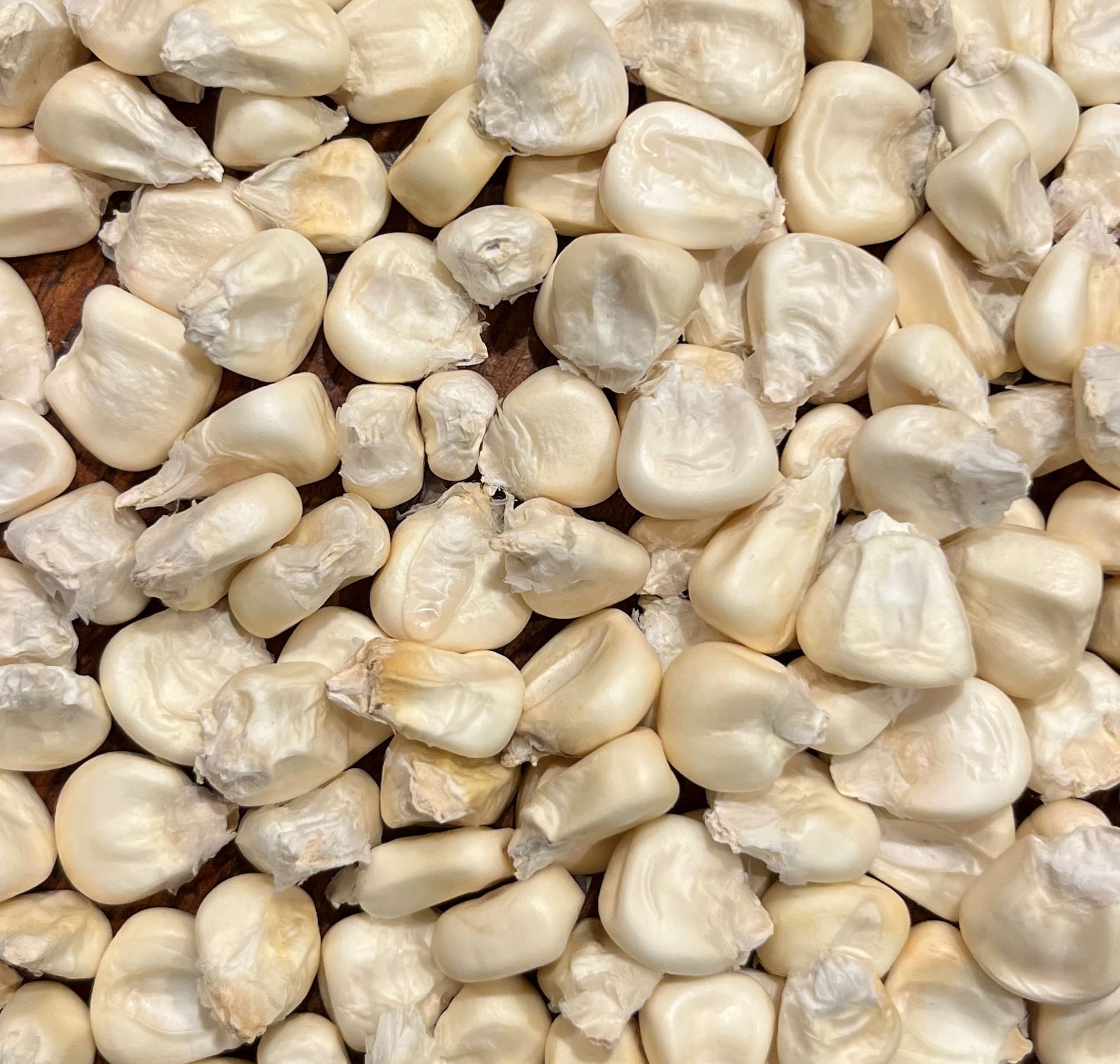 |
| Maiz para pozole, cacahuazintle |
MARIA’S METHOD
In the morning, rinse the liquid from the corn, and now you have nixtamalized the corn like everyone used to before. That's really it. The toughest part might be finding lime, but you can have it easily shipped and it will last you a very time. Salud!
- 1 bag dried maiz (available at Mexican groceries as “maiz para pozole”)
- 1 heaping tablespoon “Cal” calcium hydroxide (available at Mexican groceries)
- Soak the maiz in water for 2 hours or overnight. Add enough water to cover the maiz by 2 inches. Drain the water..
- Add maiz to a stainless steel pot, with enough water to cover again by 2 inches. Add “Cal” (calcium hydroxide) and boil for 45 minutes to 1 hour. You will know it is ready when the skin is easily rubbed off the kernel. Let maiz sit in pot until it is cooled.
- Empty into a strainer and run water over maiz, rubbing it in the strainer to gently remove the skins.
- At this point you can freeze or refrigerate the pozole.
- If using the pozole immediately, add to soup pot with water and garlic; do not add salt yet or the maiz will not open. Cook for 1 hour. Then add meat and salsa (salsa verde, salsa rojo) and salt.
METHOD #2 From Reddit
For authentic pozole, you will do this: For every kilo of dry corn (cacahuazintle) you will add one heaping tablespoon of lime (the mineral, not the fruit). Put it in a pot with around twice the water there is corn (at least) Simmer it till the skin slips off the corn ( just grab a kennel and slide it between your thumb and index finger). Then take it off the heat and let it sit for around 8hrs (do this in the evening and just come back to it in the morning). You've now done the part that "takes a lot of time" but you weren't there anyway, so who cares?In the morning, rinse the liquid from the corn, and now you have nixtamalized the corn like everyone used to before. That's really it. The toughest part might be finding lime, but you can have it easily shipped and it will last you a very time. Salud!
METHOD #3 Alternatively Breadtopia has an article on how to nixtamalize corn with great photos.
- 500 grams field corn, heirloom blue bolita corn (3 cups)
- 5 grams chef grade calcium hydroxide (1 ½ tsp)
- ~2.5 quarts water (2.4 liters or 80 ounces)
- additional water for rinsing
- Combine the water, corn kernels, and calcium hydroxide in a large non-reactive pot (stainless steel). The water should be a couple of inches higher than the level of the corn.
- Cover and bring to a boil, then let simmer for about an hour, depending on the corn kernel size. I leave the lid on, but this isn't required.
- The boiling period is over when you can easily break apart a corn kernel with your thumbnail and less than half of the inside is opaque or powdery looking. Do not drain.
- Leave the corn to soak in the liquid for 8-12 hours.
- Strain out the liquid and rinse the corn with fresh water, letting some of the corn pericarp (skin) wash away. Rub gently, but don't wash off all the soft exterior of the kernels. The inside of a kernel after the long soak will have even less of an opaque area.
- The nixtamalized corn is now ready to grind into masa or add whole to a stew, where it will need at least 1 hour more boiling to be soft enough to enjoy.
MAKING CORNBREAD From comments in BreadTopia article on Nixtamalization.
“My alterations are to substitute freshly milled “regular” dried corn for the wheat flour component and use the ground nixtamal in place of the cornmeal. I grind the nixtamalized corn in a food processor. Per Melissa’s suggestion, be sure the limed corn has been cooked through. Add sufficient water when processing to get as fine a corn grind as possible. If the result is too wet, just let the water evaporate until you get the desired consistency. The grind of the processed nixtamal will not be as fine as that of the corn flour. But the differences in texture work well in the cornbread. The key to a good cornbread batter is to get the right viscosity – not too runny or too thick. As others have suggested, I let the corn flour-nixtamal-buttermilk mixture rest (autolyze) for 30 minutes or so before adding the remaining ingredients. I hope this works for you.”

